If you’ve been passed over for a promotion or struggling to land your next role, you’ve probably wondered if age has something to do with it. To be clear, age discrimination does exist. It’s real, and it matters.
After more than thirty years in executive recruiting, I can tell you this with confidence: it is not what holds most people back. The real reason careers stall is far less obvious and far more within your control.
Why So Many Experienced Professionals Feel Stuck
I’ve sat across from countless professionals who feel like the deck is stacked against them. They have the experience. They have the track record. They’ve delivered results for years. Yet, they’re still not moving forward.
If that sounds familiar, I get it. It’s incredibly frustrating to feel like you’re doing everything right while the outcomes don’t reflect it. You start questioning the system, the market, and sometimes yourself. Frustration alone won’t move your career forward. Understanding what actually drives relevance will.
Why Experience Alone is No Longer Enough
One of the biggest misconceptions I hear is this: “If I just work harder or point to my past wins, things will turn around.” That may have worked once. It doesn’t work anymore.
Here’s the truth: potential beats experience every time. I’d rather hire someone who’s hungry than someone convinced they’ve already arrived. The professionals who stay relevant aren’t asking, “Why don’t they value what I already know?” They’re asking, “What do I need to learn next?” That question changes everything.
What You Can Control in a Changing Workplace
Instead of worrying about what you can’t control (bias, politics, market shifts) focus on what you can control:
- Your mindset
- Your adaptability
- Your curiosity
I call it being coachable. It is one of the most valuable traits in the modern workplace. Coachability signals growth. It tells leaders and organizations that you’re not done evolving and that makes you worth investing in.
The Questions That Reveal Whether You’re Still Growing
Take a moment and be honest with yourself
- When was the last time you changed your approach to work?
- When did you last learn a new skill because the industry required it, not because you felt like it?
- When someone gives you feedback, do you listen, or do you start defending?
Your answers to those questions will tell you everything you need to know about where your career is headed.
How to Build a Growth Mindset Starting This Week
Here’s your action plan:
- The next time someone challenges your thinking, try saying, “You might be right.”
- Pick one thing you’ve been doing the same way for more than two years and research whether there’s a better approach.
- Ask for feedback from someone younger than you and actually listen to it.
- Identify one new skill that’s becoming essential in your field and commit to learning it.
It’s a simple phrase, but it keeps you open, curious, and receptive to coaching.
What Happens When You Commit to Growth
When you develop a growth mindset, everything shifts. You stop defending your territory and start expanding it. You become someone who evolves with change, rather than resisting it. People like that don’t just keep their jobs; they get promoted, invested in, and paid more. Every company wants to keep them.
You Have More Control Than You Think
If you’re ready to stop making excuses and start moving forward, I can help you build the mindset that keeps you relevant, at any age. We’ve developed a proven system to help professionals do exactly that.
Remember: you have more control over your career than you think. The real question is, are you willing to use it?
About Chris Flakus
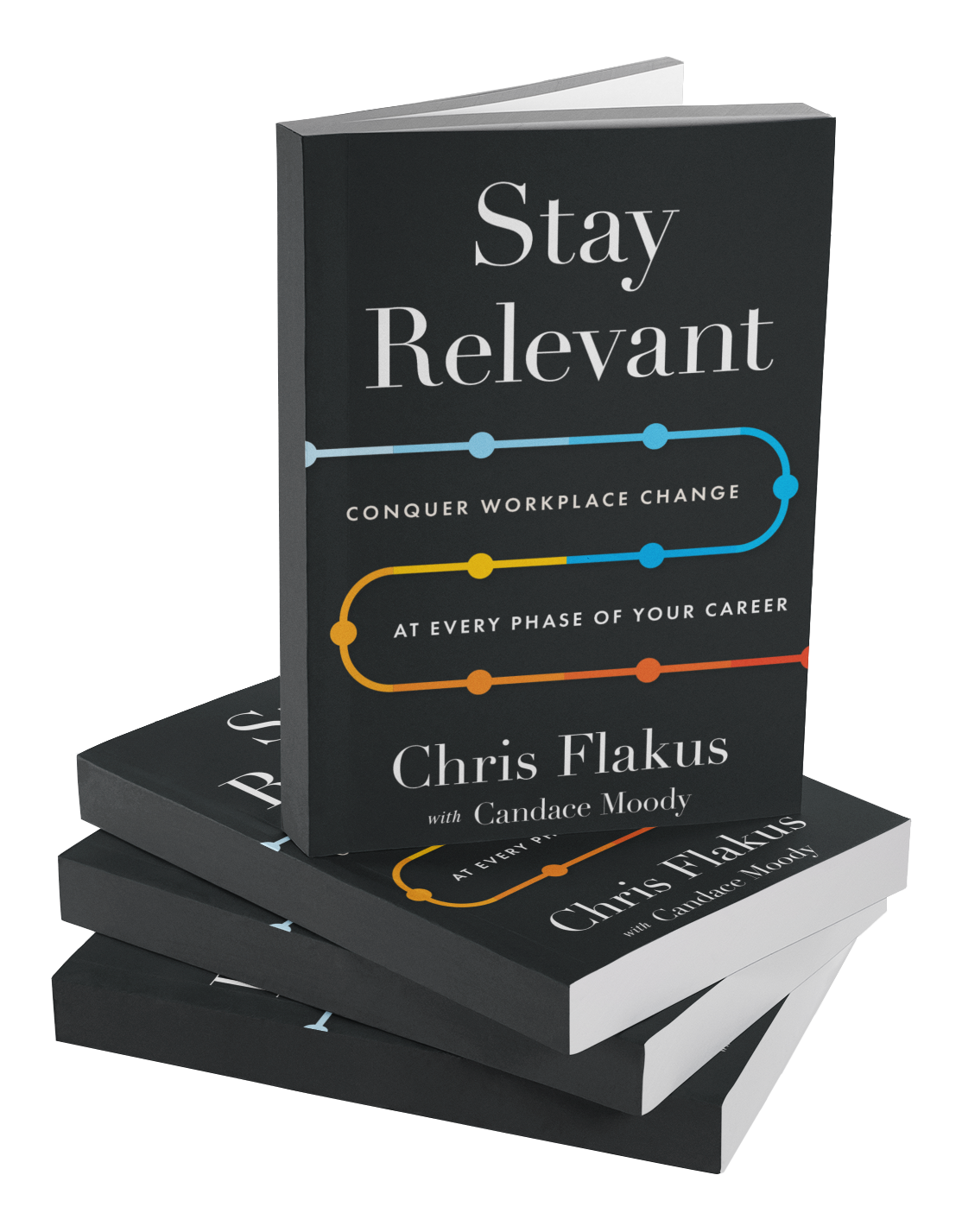
Chris Flakus is the CEO of CSI Companies and the author of “Stay Relevant.” With more than 30 years of experience in executive leadership and talent strategy, Chris has helped thousands of professionals navigate workplace change, build meaningful careers, and stay competitive in a rapidly evolving world. His work focuses on mindset, adaptability, and the practical skills needed to grow through every stage of a career.