I’m about to say something that might rub you the wrong way: potential trumps experience every single time. If you’ve got gray hair or twenty years under your belt, you might already be pushing back. I understand why. You’ve worked hard to get where you are. You’ve earned your knowledge. You’ve built credibility.
Stick with me, because understanding this shift will change how you think about your career, and how others evaluate it.
Experience Still Matters, But it’s Not the Differentiator Anymore
Let me be clear: experience absolutely matters. You’ve put in the time and learned lessons the hard way. You’ve delivered results, built expertise that younger professionals simply don’t have yet, and that’s valuable.
The experience without the willingness to grow becomes something else entirely. It becomes expensive baggage. I see it all the time. Someone with 20 years in the workforce who really has 1 year of experience repeated 20 times. They stopped learning, adapting, and evolving.
They assume their past performance guarantees future opportunities, but the workplace has changed, and it is still changing fast.
How To Treat the Real Problem, Not Just the Symptoms
One of the biggest misconceptions I hear is this: “If I just work harder or point to my past wins, things will turn around.” That may have worked once. It doesn’t work anymore.
Here’s the truth: potential beats experience every time. I’d rather hire someone who’s hungry than someone convinced they’ve already arrived. The professionals who stay relevant aren’t asking, “Why don’t they value what I already know?” They’re asking, “What do I need to learn next?” That question changes everything.
Employers Aren’t Buying Your Past, They’re Buying Your Future
Most experienced professionals walk into interviews focused on what they’ve already done. They talk about their accomplishments, track records, and history of success. Here’s what employers are actually evaluating: What are you going to do next?
They’re looking for trajectory, momentum, curiosity, and coachability. If your answer to that question sounds like, “I’ll do the same thing I’ve always done,” it doesn’t matter how impressive your resume is. The signal you’re sending is that you’ve plateaued. Plateaued professionals don’t get hired; they get passed over.
The People Who Stay Relevant Combine Experience With a Beginner’s Mindset
The most valuable professionals I know don’t choose between experience and potential; they combine them. They use their knowledge as a foundation, not a ceiling. They stay curious, ask questions, and keep learning.
Think about Tom Brady when he was drafted 199th overall. He wasn’t selected because of a long track record. He was selected because someone saw potential. The work ethic, adaptability, and the ability to grow into something bigger.
That’s what changed his career, and it’s the same principle that applies in every industry today. Experience gives you credibility. Potential gives you momentum. You need both.
A Simple Guy Check: Are You Defending or Growing?
Here is a question worth sitting with: when someone challenges you at work, what is your instinct? Do you defend your method, or are you curious about alternatives? Do you dismiss new tools and ideas or explore them?
Your reaction reveals everything about how others perceive you. Are you someone who’s still evolving or someone protecting what you already know? The answer to that question is often the difference between staying relevant and slowly getting left behind.
How to Demonstrate Potential, Starting This Week
Potential isn’t something you claim; it is something you show. It shows up in small, consistent behaviors.
Start here:
- Identify one skill that’s becoming more important in your field and begin learning it.
- Ask someone you respect for feedback and actually implement what they suggest.
- Volunteer for a project that stretches your abilities, even if it’s uncomfortable.
- In conversations, focus on asking thoughtful questions instead of proving what you already know.
These aren’t dramatic moves, but they send a powerful message: you’re still growing. That’s what employers notice.
Where Does This Lead?
When you combine deep experience with a growth mindset, everything changes. You’re no longer just the person who understands how things used to work. You become the person who can connect the past to the future. The one who helps teams navigate change and who adapts faster than everyone else.
That is the professional organizations invest in, the person they promote, and the person they fight to keep.
The Real Opportunity
If you are willing to show that you’re not just experienced, but still evolving, you position yourself. You stop competing on tenure and start competing on trajectory. That is a game you can win at any stage of your career.
There are practical ways to do this. Different ways to demonstrate momentum, curiosity, and relevance without abandoning everything you’ve built. You don’t need to start over to keep building.
About Chris Flakus
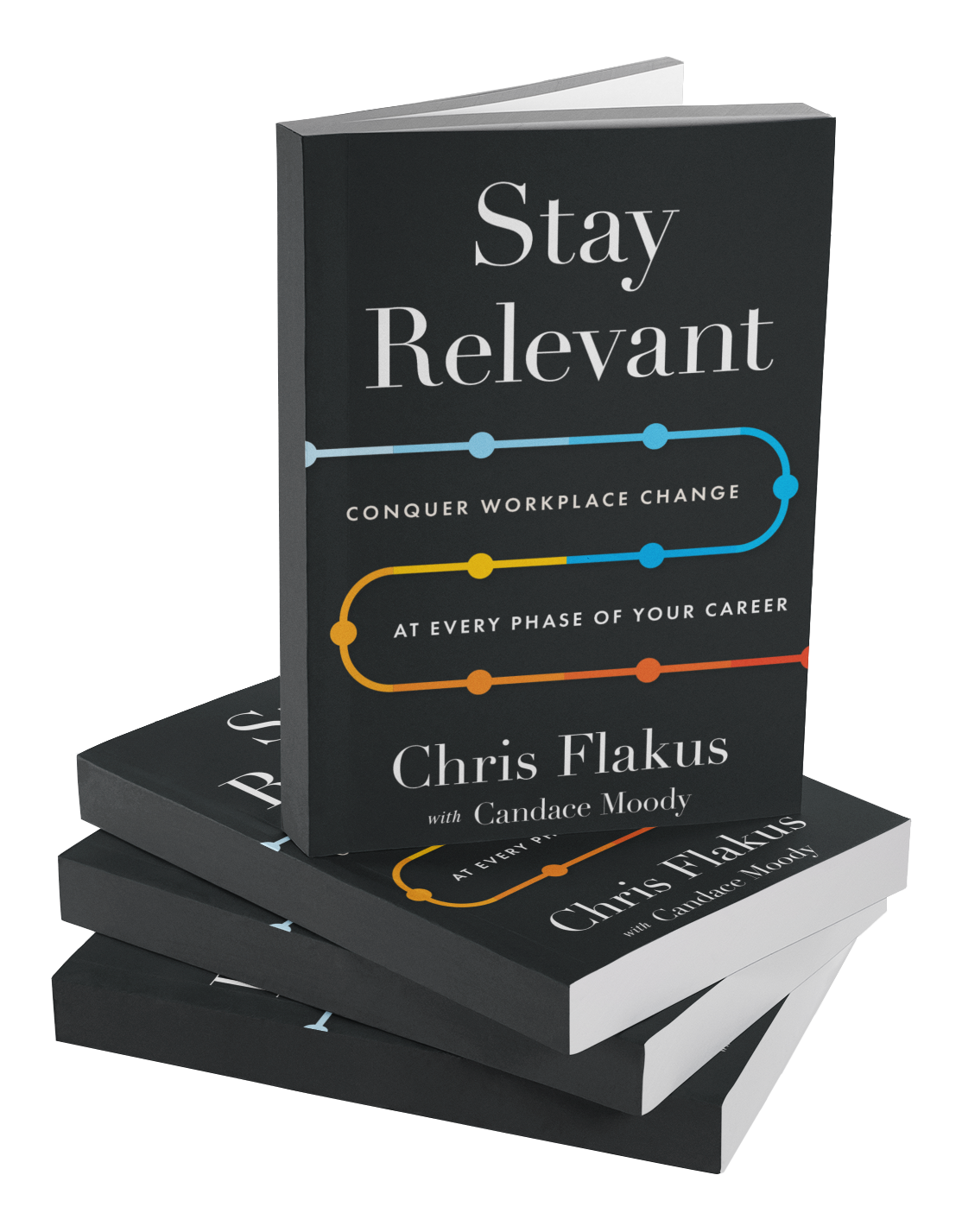
Chris Flakus is the CEO of CSI Companies and the author of “Stay Relevant.” With more than 30 years of experience in executive leadership and talent strategy, Chris has helped thousands of professionals navigate workplace change, build meaningful careers, and stay competitive in a rapidly evolving world. His work focuses on mindset, adaptability, and the practical skills needed to grow through every stage of a career.